Lux Absio Bervatum

Showing posts with label brain stuff. Show all posts

Tuesday, January 20, 2026

Aesthetic satiation

It's interesting that there's a sort of refractory period for enjoying a movie. In biology, refractory periods are spans of time following a stimulus during which further stimulus produces no effect. And it's kind of also true for something like watching a movie you love. Rewatching the same movie immediately after a viewing is usually not fun. Two months later is better, but five years later is even better than that. Apparently in psychology they call this "aesthetic satiation."

I think this might be the key to moderation and an overall happier life: Gaming aesthetic satiation. You don't want the most pleasure, you want the highest quality pleasure. That movie you love—what's the optimal amount of time between viewings that yields the greatest enjoyment? If we can figure that out, then we should be able to maximize enjoyment by planning viewings every x days. Reliable measurement is hard, of course, all sorts of biases and noise. Plus I suspect it's not linear. The graph probably looks something like this:

So optimizing for maximum enjoyment over your lifetime might mean watching the movie every period "A" because that's where the rate of enjoyment-gains-per-day (the derivative) starts to decrease.

I think this is probably the case for everything enjoyable (music, books, desserts, intimacy, etc.), not just movies. Maybe we should try to notice how much we enjoy something in relation to how long it's been since we last experienced it and let those observations guide our behavior.

Thursday, July 31, 2025

My experience with ketamine infusion therapy

Overview

I recently went through ketamine infusion therapy for depression and want to share my experience. (Buckle up, this is a long post.) Overall, it was very, very positive. If you’re not familiar, the therapy consists of getting hooked up to some equipment (IV pump, blood pressure cuff, pulse oximeter) and sitting in a dark room for 40-120 minutes at a time. The pump pushes a steady dose of ketamine (and a little antiemetic to control nausea) into your veins throughout the infusion. Medical staff check your vitals periodically. Eventually they come in, say you’re done, unhook you from the machines, and you can spend a few minutes getting your bearings before leaving. The clinic I went to recommends six 40-minute infusion sessions within a 15-day period with the option of another one or two sessions in the 3-6 weeks following that period.

I won’t try to explain what happens neurochemically, but basically the thinking is that this treatment increases neuroplasticity in the days and weeks that follow. As I understand it, repeated exposure to the drug “loosens up” rigid patterns of thought, freeing your brain to form new, healthier patterns. And this helps treat depression and anxiety. (Subjectively, I feel like it might grant perspective that makes it easier to find your way out of these dysfunctional loops.)

Ketamine, especially in these doses, is profoundly disorienting and nausea is a common effect. They tell you to fast for 8 hours before the infusion and limit liquids in the last 2 hours. (I once tried fasting for only 3 hours after a light lunch and that was the only time I had noticeable nausea afterwards. Fasting the full 8 hours is a good idea.) You also shouldn’t drive or make important decisions for 24 hours following each infusion.

The clinic I used strongly recommends being under the care of a mental health provider prior to and during infusion therapy. I think that’s a very good idea.

Details

This table shows how my sessions were scheduled, the ketamine dose for each session (expressed as milligrams per kilogram of bodyweight), and what I listened to.

Session Day Time Dose Music
1 1 (June 10) 5:15pm 0.53 mg/kg Richard Houghten
2 3 (June 12) 6:15pm 0.64 mg/kg Mikel
3 9 (June 18) 3:30pm 0.64 mg/kg Richard Houghten
4 10 (June 19) 3:30pm 0.76 mg/kg The Japanese Town
5 15 (June 24) 4:00pm 0.76 mg/kg River Master
6 16 (June 25) 3:00pm 0.82 mg/kg sole space
7 36 (July 15) 3:00pm 0.82 mg/kg custom playlist

For anyone considering this therapy, I’d recommend spacing the infusions with at least one day between them if possible, rather than having them back-to-back like I did due to schedule limitations.

Audio

Also, regarding music: The provider I worked with recommended calm, gentle music without lyrics and I think that’s excellent advice. Your thoughts can go strange places while in that dissociative state and I strongly suspect lyrics would encourage unhelpful diversion. The disassociation isn’t just a byproduct, it’s the therapeutic payload. Tempo and mood make a difference too; for my second infusion, I listened to Zelda & Chill II and, though I enjoy that album in other contexts, found it to be a poor choice for these infusions. It had a dark, mechanical “marching” vibe that made me feel like I should doing. That’s apt for video games, but wrong for this experience.

The albums that worked best for me during the infusions were Sailing through Rainbows of Sound, meowcraft, and The Angler’s Dream. Earbuds with active noise cancellation are a good idea.

Play-by-Play

Because it’s something I would want to know, I’ll describe in detail what happens during each infusion visit. Bear in mind that: (1) these were preceded by a consultation appointment where I discussed my complete medical history with the provider and got to ask lots of questions, and (2) protocols differ and this only represents my perception of how one clinic does things. That said, here’s how it goes:

The patient arrives. Since they won’t be driving after, they were probably brought there by someone they trust. They identify themselves to the reception team and pay the fee. Reception then escorts them to a small room just large enough for a sink, some cabinets, a power recliner, a stool, and a chair. The care provider comes in and talks with the patient for a couple minutes. Meanwhile, a nurse enters and starts getting things ready. The provider gives the nurse some instructions which might include information like dose, use of an initial bolus, and additional medications (perhaps to control blood pressure or nausea). They tell the patient the nurse will check on them about ten minutes into the therapy and the patient should try to give a thumbs-up if everything is going well.

The provider leaves and the nurse preps the patient for IV catheterization (helps choose the site, swabs the skin, gives a small subcutaneous lidocaine shot to numb the spot). The nurse places the IV, then connects the blood pressure cuff and pulse ox finger clip. The nurse records patient vitals and starts the IV pump. Before the nurse leaves, they switch off the lights and turn on a projector that covers the ceiling in slow, swirling green and blue shapes. The patient reclines the seat and stares at the ceiling.

It takes a little while for the drug’s effects to become noticeable, maybe two or three minutes. The first thing I notice is that my tongue and fingertips start feeling “fuzzy.” The disassociation comes on gradually. I would begin feeling very comfortable, but not sleepy. The state itself is hard to describe. You don’t think in the ways you normally do. Maybe imagination deepens. Time seems to move at a different rate. The nurse checks in, a thumbs-up is given, they leave.

Thirty minutes later, the nurse comes in and makes sure the patient has some awareness. They remove the sensors and IV, then bandage the insertion site. They leave the lights off and tell the patient to take as long as they need to get their bearings. Once the patient feels well enough to walk, they go outside and meet their ride.

Thoughts, Mind-Wandering

Here are some things that passed through my mind during the infusions. These were mostly like vivid daydreams, or possibly pseudohallucinations.

During the first infusion, I briefly forgot where I was and felt like I was in a place outside the world. Another time, I felt like I was capable of perceiving everything anywhere and my entire life to that point had just been a tiny, arbitrary sliver of this greater continuum of experience.

For a while I considered the vast amounts of human labor it took to produce the room I was sitting in; the construction of the building, the manufacturing of the tools to do that construction, the development of technologies to produce materials, laying all the roads to bring them there, the training of the staff (and the training of the trainers), and all these recursive origins for the people, objects, and knowledge that went into creating this little room for this simple (in a way) treatment.

Once, I was in something, part of it. I couldn’t move or breathe, but there was no sense of confinement because I was getting everything I needed to live. I knew that the things surrounding me were having the same experience and we had some awareness of each other. I had a moment of panic, thinking, “Oh no, what am I supposed to be doing?” And then a surge of relief realizing that I was already fulfilling all my obligations by just existing in this state. I think I was a cell in the body of a larger organism.

Something that felt like an epiphany and stuck with me for a long time after: There’s no escape from existence. Once you have presence, the feeling of being, you will always have it. Death might change it, or erase memories, but “you” (as in, the thing that feels) still exist and experience something. If you were looking forward to some “final rest” forget about it! The only feasible response is acceptance because the alternative is discomfort and longing without end. Learn to love existing. (I admit some cognitive dissonance about this. It’s impossible for me to know it without evidence, but it feels true and I think the belief is functionally useful.)

Cost

I understood the cost per infusion, without insurance, to be $350. Fortunately, my insurance covered it and the Explanation of Benefits forms showed an “amount billed” of $407 per infusion. My personal costs were $200 for each of the first five visits, at which point I hit my deductible so visits six and seven were only $100 each. My total out-of-pocket cost with insurance was $1,200.

Effects

The short-term effects are apparent and somewhat negative. Immediately following an infusion I would only want to lie down and watch TV. I’d have no appetite. But this went away after 4-5 hours and I was back to feeling fully normal by the middle of the next day, aside from a temporary reduction in physical stamina. The reduced stamina lasted, at most, 2-3 days. During that time I also felt sharper while doing complex tasks, sort of like the opposite of brain fog.

The longer-term effects are more subtle. My mood improved massively, though not immediately. For me, it took a couple weeks. And even then I wasn’t sure about the cause since there’s some natural variation and an uptick in early summer is typical. But now that I have more data I feel confident in attributing most of the improvement to the ketamine infusion therapy. Here’s a chart from a daily mood tracking app I use:


Other longer-term changes I’ve noticed include a small increase in libido and shortened recovery from events that would usually worsen my mood for hours or days after.

Overall, I’m extremely satisfied with the therapy. The provider at the clinic says I can come in for booster infusions in the future and I can imagine myself benefiting from those. Maybe in 3-6 months or a year, we’ll see. I don’t regret my 7th infusion but it felt like the returns had diminished substantially.

Tuesday, June 25, 2024

2 Things to Vent About

Here are two behaviors I need to vent about. The world hardly needs more negativity so I will at least make it quick. This is all IMO, disclaimer disclaimer, etc.

  1. Criticism by proxy. I've touched on this before, but it was from a don't-yuck-my-yum angle. Now, the true intent is more clear: Sometimes a person resents you but they want to keep up the appearance of being magnanimous (or simply "not a jerk"). So instead of belittling you directly, they criticize the things around you. "Your house is shabby, your car is gay, that picture (you picked out) is ugly." It's usually sneakier than that, but that's the gist of it. All of it so that if you blow up and ask them "what is your problem with me?" then they can look shocked and retort, honestly (technically), "I never said a word against you!" Right, you just slagged off every choice I made, they way I live, etc. etc. Eventually it's obvious what their real target has always been.

  2. Setting daemons. A daemon is a background process in computing and it's how I think of certain (non-computing) tasks with specific triggers. I am assigned tasks all the time and they broadly fall into three categories: Do it when able, do it at a certain time, and do it when a condition is met. That last category has the potential to incur terrible costs beyond the cost of the task itself. "Tell me this account balance" and "tell me this account balance on the first of every month" are easy. The latter just needs a recurring calendar entry. But "tell me this account balance when it becomes negative" is a huge pain in the neck. (Because what am I going to do, check that account every day to see if the balance has turned negative? It might not turn negative for three years, and if it takes me one minute to check it each day, that's more than 18 hours of work you're asking for.)

    My real gripe with this one is that the people asking almost never think about the processes involved. They assume things can be automated when they can't. I explain this, but it rarely sinks in. Many times, the best I can do is turn it into a category-II task ("Okay, I'll check it on the first of every month and tell you if it's negative."), but even then, using the previous example, we're looking at 36 minutes of work. And the real problem here is that the asker, being ignorant of the process (and often unwilling to learn), gives the request as much weight as if it only needed to be done once ("It only takes you a minute!").
Alright, it's off my chest. Thanks.

Friday, January 14, 2022

Mood Tracking Stats for CY2021

I've done mood tracking in the past, but only for a few weeks or months at a time when things were particularly bad. In mid-2020 I finally succeeded in making it a daily habit and have kept up on it since then. So 2021 is the first full year for which I have detailed daily mood data. The tracker app I use doesn't go into quite as much detail as I wanted, so I exported the numbers to CSV and made some charts in Excel.

Tracking can be really helpful for mood disorders. You can measure the effects of interventions to see what's worthwhile. Also, depression can cause memory impairment, so daily logging gives more reliable data than, say, a weekly or bi-weekly recap.

The following charts are based on my 01/01/2021-12/31/2021 data. Mood ranges from 1 to 5 (bad to good). First, Average Mood by Week Number and Average Mood by Month, both with linear and polynomial trendlines.


One pattern I can see here is that my average mood improved substantially when I began working from home in early July.

Work has a big influence on this next chart too—Average Mood by Day of Week:


I imagine those Day-of-Week numbers are a common pattern for folks that work Monday-Friday; gradual rise up to Friday and then much higher on the weekend.

This last one, Average Mood by Day of Month, is probably more specific to me. A lot of the work I do is very cyclical with a heavy load at the beginning of the month that usually starts to lessen around the 9th or 10th, then pretty steady till "crunch time" around the 25th or 26th. (Edit: The red dashed line is a 3-day moving average.)


There's also extra work following the end of each quarter. I don't think I have enough data for that effect to be discernible yet, but maybe in a couple more years. I'm also interested to see how these numbers might be affected by weather or temperature.

Thursday, September 3, 2015

stuff I listened to today


  1. Never Shout Never's second album
  2. the 9/2 broadcast of the Rachel Maddow show (as a podcast)
  3. the Fresh Air episode about how white nationalists really like Donald Trump (podcast)
  4. the 9/2 episode of As It Happens (CBC Radio show/podcast)
  5. the Emoji Antique album of Postmodern Jukebox
  6. Two Wuv by Tally Hall, like 5 times because it's a great song
  7. scattered songs from my "Starred" Spotify playlist (mostly at gym)
It had not occurred to me how much audio media I consume. If I ever end up in a coma or something and there's a chance that I might be conscious but totally paralyzed and unable to move I would like someone to set up something so I can listen to a variety of things for 6 hours a day with 5 minute breaks between each item:
  • By duration: 
    • 19% Rachel Maddow/John Oliver/Stephen Colbert or equivalent, people talking about current events in a funny way
    • 27% music... broken up thusly:
      • 20% They Might Be Giants (random albums)
      • 50% each of my spotify playlists
      • 20% spotify's Discover thing
      • 10% albums recommended by people I know
        • you guys, keep recommending albums after I go into the coma/paralyzed thing
        • recommend ones you think I'd like
    • 28% Stuff You Should Know/Stuff You Missed in History Class/Radiolab, these kinds of shows. Kinda pop-educational stuff.
    • 10% Comedy Bang Bang/Stop Podcasting Yourself/Dear Hank & John/Marc Maron type shows
    • 16% one audio book at a time based on analysis of my kindle library and audible purchases

Saturday, May 23, 2015

Saturday, May 16, 2015

Lately

I have been listening to a lot of Tally Hall lately.


Have a prototype, laser cut translucent acrylic, coming from Ponoko. For a game I'm trying to make.


Okay, I need to lay in the sun. For vitamin D. Mood. It feels healthy. 15 minutes per side.

Saturday, January 31, 2015

Cats, Connectomes, Crawling

New vlog: Cats, Connectomes, Crawling.

Friday, August 29, 2014

The Hippocampus

Preparation by László Seress (1980)
CC BY-SA 3.0
Fun fact: The hippocampus (brain doohickey) is named that because it kinda looks like a seahorse and seahorses are in the hippocampus genus. And the hippocampus is where rats grow lots of extra brain cells when dosed with certain cannabinoids. LEARNING IS FUN.

Wednesday, August 20, 2014

Awesome wiki page

This wikipedia article is really fun to read through:

http://en.wikipedia.org/wiki/List_of_cognitive_biases

Saturday, August 9, 2014

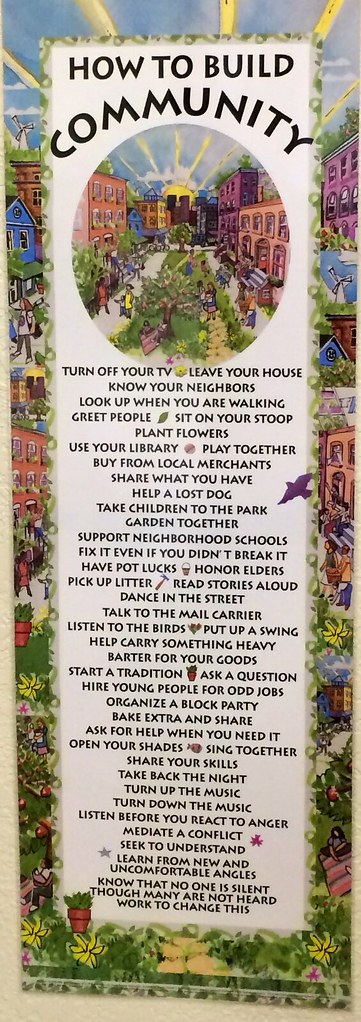
How to Build Community and RAMBLING

Have you guys seen this poster? My doctor has this hanging in his office and I took a photo of it with my phone the last time I was there. I thought it was a bunch of cheesy BS the first time I noticed it, but eventually I got it. If you find this stupid I implore you to spend some time thinking about WHY you feel that way. It might not be perfect (I'm not going to dance in the street, poster) but it gets a lot right. If everyone would spend a tiny bit more effort doing some of this stuff, everyone's lives would improve.

How to Build Community

You should try to be as healthy as possible. Physically, mentally, emotionally. Sometimes you have to make hard choices, like if you're feeling down and hungry and there's a piece of chocolate cake in the fridge. The healthy choice might be to eat an apple instead and go talk to a friend. But it's also possible that the healthy choice could be to eat the cake because you know you can use the temporary mood elevation and energy to clean the house and then the satisfaction that brings you will be more effective in lifting you out of your funk. Of course, you have to check yourself. You might just be rationalizing so you can have the cake. That's why you need to have some self-awareness. Like, know how you tend to operate.

Here's how I build my own self-awareness: I keep a journal. I do more than just that, but I think the journal is really important. My memory isn't as good as I want it to be. (That's probably true for everyone though, right?) So I write down things I'm feeling and dates and instructions for myself (when I think I'm having a moment of clarity). Then I review it later. Oof, sorry, I just ran out of steam. Feeling tired. So I'm gonna stop here.

I had a lot of sugar last night, so I think that's the problem. Sugar's not good for me. It's super fun to eat, but it increases the amplitude of the oscillation of your mood. Okay, I shouldn't say it's not good for me, it's just that it's one of those dangerous tools because it affects dopamine and endorphins.

Anyway, that was my own fault; Jason and Erin came over and made dinner for me (which was super nice of them, they're great) and we had ice cream for dessert and they left it in the freezer for me and I do not act responsibly when I know there's something THAT delicious in the freezer just waiting to be et. So I ate ALL THE ICE CREAM. It was so satisfying at the time, but it wasn't worth the disruption that it's causing me now. Because now I just want to nap or lay on the sofa and watch a movie and I much prefer being productive. Passive entertainment isn't great for your brain. At least by my personal standards anyway. I like my brain best when it wants intense engagement and has positive mood. That's not the case right now. But sleep will probably fix that.

Brainthings

me and Chords

Friday, August 8, 2014

Henry's Fucking Helpful Advice


Shut up, it is not too pollyannaish! Maybe you're just being being negative.

Thursday, July 10, 2014

Hurf durf brain things

You should read this interview with Adam Phillips from the Paris Review. Here are a couple passages I thought were interesting:
He believed that everybody’s deepest fear was loss of desire, what he called aphanisis. For him that’s the thing we’re most acutely anxious about, having no desire. People now might call it depression, but it wouldn’t be the right word for it, because he’s talking about a very powerful anxiety of living in a world in which there’s nothing and nobody one wants.
Your mind by itself is full of unmediated anxieties and conflicts. In conversation things can be metabolized and digested through somebody else—I say something to you and you can give it back to me in different forms—whereas you’ll notice that your own mind is very often extremely repetitive. It is very difficult to surprise oneself in one’s own mind. The vocabulary of one’s self-criticism is so impoverished and clichéd. We are at our most stupid in our self-hatred.

Saturday, May 3, 2014

Some possibly helpful stuff on thinking (or not)

You can technically meditate in any position with any stimuli. But the stuff that triggers “dukha” gets exacerbated when it gradually gets more and more intense, which it will if you’re not in the most sustainable position possible, which is also the healthiest, maybe. Who knows. But you sit cross-legged only you don’t tuck each foot under your lower thigh, instead put one squarely under the knee and the other squarely on top. Knees aren’t square but you see what I mean, right?

Then you kind of arch your back. Make yourself have good posture. That lets you breathe easiest and it feels okay after ten minutes (if you slouch it will eventually make you slightly sore and that’s dukha. It pulls you out of the meditating.

Which—like, I feel like that verb should be “becoming nothing” sort of, but that sounds too mystical. It’s not magic or spirits or any bullshit. It’s all part of you already. This is a neurobiological trick many animals have, humans included. But we have gotten so good at distracting ourselves (because dukha isn’t necessarily unpleasant, it’s just the stuff that generates thought… and thinking is alright, but it’s not what you’re doing when you meditate) that we don’t see its real value.

I think the way in which meditation is good for you is related to the ways sleep is good for you. It causes chemical changes in your brain that put it in a state where it can better modulate its reaction to stimuli.

So anyway, like I was saying before: You arch your back a bit. You know what good posture is like; just do that. Your hands rest in your lap with your wrists on your thighs or knees.

So this is the optimal position for some people. You should really try it before you assume it’s not going to work for you. The point is that it keeps body aches to a minimum and the lack of aversive stimuli prevents you from building up a negative response to it. If the negative response outweighs the immediately-perceivable benefit, you will become adverse to the experience. So try doing it right from the start.

HOWEVER. Nothing is absolute! That position might be wrong for you. You have to trust that you’ll know when you’ve found the position most conducive to achieving that valuable state.

So the whole “Noble Eightfold Path” business is about minimizing dukha. And some things that minimize dukha are being reasonably honest, having empathy for others, and generally being ethical and able to be justifiably content with who you are as a person. This is another thing that gets dressed up with mystical B.S. Period. You don’t have to buy into that stuff to get the good parts from the understanding (or feeling of understanding? But these words aren’t adequate for the experience.) it brings.

You don’t have to be a good person to meditate, but being a not-good person will make meditation difficult. And you just have to be good by your own internal standards, which only you can truly know. I wonder if a serial killer, like a total sociopath who doesn’t see the value of human life, could meditate. I kind of doubt it, but who knows. He probably wouldn’t actually try (figuring out what “actually trying” means can be harder than expected).

Oh, and it helps to be healthy, because the healthier you are, the less dukha you have to deal with. So the Eightfold Path stuff points you that way too.

Stave Hagen is right about how you can’t tell someone how to meditate. You can only point at the thing and hope they see it (but it’s hard to see, so you have to be patient and let it happen).
http://pixabay.com/en/wheel-rotate-gear-gears-mechanical-37306/

You shouldn’t put all your trust in the pointing. Because almost no one can express a complex concept in language with such clarity that understanding is forced into another person’s mind. Everyone’s mind has an immune system that is self-regulating and it takes different approaches to get understanding to actually get all the way through into the real workings of your mind. All you can do is make an effort to work the outside into the insides, like keep an open mind. So some of this stuff might get through and help, but it might not. Doesn’t mean there’s anything wrong with either of us. But good on you for trying anyhow, if that ends up being the case.

I guess an important point is that you have to figure this out on your own, because it’s at as least as personal to each of us as any other basic function. [Note: I had a whole analogy about pooping here but it started to gross me out, so we can find a different analogy at some point. Though I suppose if I were more enlightened I might have a different opinion about this. But that’s the level of basic function I’m talking about.]

The way sleeping can make you think better, so can meditating. And have you ever felt really sharp after correcting your diet? (Like if you’d been eating a lot of tasty but counterproductive food and just noticed, so you start eating more vegetables.) Well meditating is like that. Only it exercises a weird part of you that we might not have words for. Some part of your thinking apparatus.

HTH

Saturday, March 29, 2014

A weird M. of S.A.C., em-sack

Two-legged boxer! The front two. Which is not what I expected when I saw the title on reddit. Because I've seen a two-legged dog with only the back legs remaining. I would not have thought a dog could balance on its front two legs.


Also, the wikipedia entry on curiosity is awesome.

Edit: Oh man, I want one of these:


Saturday, March 15, 2014

The best thing for being sad

“The best thing for being sad," replied Merlin, beginning to puff and blow, "is to learn something. That's the only thing that never fails. You may grow old and trembling in your anatomies, you may lie awake at night listening to the disorder of your veins, you may miss your only love, you may see the world about you devastated by evil lunatics, or know your honour trampled in the sewers of baser minds. There is only one thing for it then — to learn. Learn why the world wags and what wags it. That is the only thing which the mind can never exhaust, never alienate, never be tortured by, never fear or distrust, and never dream of regretting. Learning is the only thing for you. Look what a lot of things there are to learn.”
―T.H. White, The Once and Future King
ALSO: IDLENESS correlates with depression.